A tale of greed, bad science and poor decision-making by the FDA which is unfortunately not unique.
Pre-term birth, delivery before 37 weeks gestation, is a serious problem. It puts the baby at risk of disability or even death. Women who have had one “premie” are eager to do anything to avoid one in subsequent pregnancies, as are their doctors. The best estimates are that women who have had one premature delivery have a 30% risk of having one on a subsequent pregnancy.
Short of putting women on prolonged bedrest, there has been little available to reduce the rate of premature delivery. A “meta-analysis” of previously published studies done in 1990 suggested that while the hormone hydroxyprogesterone did not prevent miscarriage (for which it had been used), it appeared to protect against preterm birth. In 2003, a trial was conducted that claimed to show that injecting pregnant women weekly with hydroxyprogesterone in mid-pregnancy reduced the number of premature births. The treated group had 36% premature deliveries compared to 55% in the placebo group. There were many critics of the study, who pointed out that the placebo group had a much higher rate of premature birth than would have been expected, and those in the treated group had a similar but higher rate than expected if nothing were done. It was also pointed out that the pregnant uterus was “awash” in progesterone and so there was little biologic reason to expect the injections to do much.
Despite these reservations, many obstetricians began prescribing this treatment. Compounding pharmacies began making the injections and selling them for $15/shot. Enter stage right Adeza Biomedical, which used the 2003 trial to support their application for FDA approval of their branded hydroxyprogesterone for the prevention of premature birth. Many of the FDA’s own scientists pointed out the flaws of the trial, and when the branded product (Makena) was approved, it was with the stipulation that further trials be conducted. This trial, which enrolled over three times as many women, and reported results in March 2019, showed NO benefit from use of Makena.
The FDA convened another “expert panel” to decide if the drug should be kept on the market. The panel voted unanimously that the newer trial did not verify the benefit of Makena, and 13 to 3 that the combined evidence from the original and the newer trial did not provide evidence of any substantial benefit. When the vote came on whether to leave it on the market, the vote was much closer: 9 to 7 in favor of removing it from the market. The FDA decided to leave it on the market.
“Follow the money” has clarified many apparently confusing stories. While the product was sold for $15/shot by compounding pharmacies, Makena was marketed at an initial price of $1440/shot! As generics have entered the market, the list price has fallen, but is still $848/shot for a product that was profitable at $15. This obscene profit margin has allowed its current manufacturer, AMAG Pharmaceuticals, to generously support the American College of Obstetricians and Gynecologists and the Society for Maternal-Fetal Medicine, which supplied many of the expert panelists. Neither society has yet reflected the negative trial in their guidelines.
My take home is that all FDA panelists should be truly disinterested. Societies accepting money from drug manufacturers and researchers getting support from manufacturers should be automatically excluded from advisory panels.
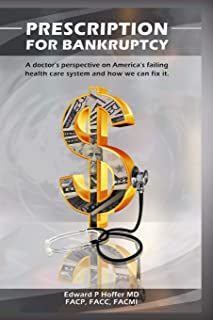
Prescription for Bankruptcy. Buy the book on Amazon
Saturday, April 18, 2020

Sunday, April 12, 2020
The coronavirus chaos: who is to blame?
“WE'RE NUMBER ONE 1!” I guess that is supposed to be something to make Americans proud. However, on April 11 that meant the United States had passed Italy in registering the greatest number of reported deaths from COVID-19. Worldwide, there are now over 1.7 million confirmed cases and over 104,000 deaths. The United States, with a bit over 4% of the world’s population, had some 501,700 cases and 18,860 deaths.
IN THE RICHEST COUNTRY ON PLANET EARTH, the vice president is suggesting that doctors "recycle gowns" because hospitals don't have enough; states are sending ventilators to other states when this disease seems to recede because the medical devices are scarce; a fund meant to rescue small business is running out of money and Congress can't figure out how to fix it; the president said "we have the best" system for testing people for the coronavirus, even though other nations have tested a far higher percentage of their population; and a debate is raging among politicians about opening the economy, even though medical professionals say the disease is not yet controlled.
Contrast the U.S. with South Korea, an advanced economy of some 51.5 million, not nearly as wealthy as the U.S., nor blessed with the wealth of scientific and medical resources. Both South Korea and the U.S. reported their first COVID-19 cases on January 20. From that point, things dramatically diverged. If South Korea had cases and deaths in the same proportion of their population, they would have registered 79,635 cases and 2994 deaths. The actual numbers? 10,480 cases and 211 deaths! You cannot explain this away by different counting methods. South Korea has been much more aggressive in testing than the U.S., so we are much more likely to be undercounting than are the Koreans.
Who is to blame for the fiasco that is the U.S. response to COVID-19? There is blame enough for many, but the federal government bears the lion’s share.
China must take some share. When the first cases of the novel pneumonia appeared in Wuhan, the Chinese desire to save face and avoid scrutiny from Beijing led the political leaders of Hubei Province to downplay it and try to silence the messenger: Dr. Li Wenliang issued a warning about a strange new virus. Then the authorities summoned him for questioning. He was told to be silent. Dr. Li died of COVID-19, a true martyr. Precious weeks of preparation were lost.
Our health care system has in places responded with speed and cooperation, but in others has not covered itself with glory. We are all aware of the lack of personal protective equipment (PPE) that puts our doctors and nurses at risk. In several well-publicized cases, doctors and nurses who went public with their concerns or even started a GoFundMe campaign to obtain the needed gear were fired by their hospitals! Shades of Dr. Li. Not only does lack of PPE put front-line health care personnel at risk, it harms patients by making the physicians and nurses see them less often and/or transmit virus between patients. More and more physicians now work for venture capital firms. In NY, many of these responded to the COVID epidemic by cutting down the doctors’ shifts; after all, many of these patients are uninsured and not profitable. This epidemic has shown it is time to take direction of health care away from “the suits” and put it in the hands of those who understand patient care.
By far the biggest failure is the incompetence of the federal response. When word of the novel coronavirus spread, South Korea sprang into action with early mass testing, tracking and isolating all contacts of those infected. It started developing and stockpiling test kits in early January, as soon as Chinese scientists released the virus's genetic code and before a single Korean had been infected. The U.S. could have done the same. As far back as 2005, George Bush, having read a book about the 1918-1919 Spanish flu, tasked the CDC with gearing up to respond to pandemics. The Obama administration refined this during the Ebola crisis, and had a pandemic unit within the National Security Council. In 2018, as part of “reorganizing” the NSC, the pandemic unit was eliminated. While South Korea mobilized to prepare, and despite multiple warnings from within his administration, Trump insisted that “this is no worse than the flu,” and that “it will magically disappear by April.”
Shortages of supplies for our hospitals and health-care providers continue to plague our response to the novel coronavirus. As late as March 2, the administration was urging American businesses to take advantage of the booming market to export such supplies to other countries. If Trump had invoked the Defense Production Act earlier, he could have kept masks, ventilators, and PPEs at home. In February 2020, the value of U.S. mask exports to China was 1094% higher than the 2019 monthly average.
Even more disturbing are investigations into what is happening to the supplies hospitals and states are ordering. In the absence of federal masks, PPEs, ventilators, and so on, the president urged states to get what they needed themselves. They have bought supplies on the open market, only to have the federal government confiscate them. Federal supplies are being disproportionally distributed to states that vote Republican rather than states which most need them. It seems likely that at least some of the confusion is simply poor management, but the suggestion that leading administration officials are trying to create political capital out of this crisis seems in keeping with their usual patterns.
Testing, despite Trump’s claims, remains far behind that done in Korea, Singapore and other countries. Unproven therapies with potential for harm are being pushed by non-medical administration figures, from the President down. The Trump administration seems fixated on his image and the economy, public health be damned. This goes back to Trump’s insistence that a cruise ship with coronavirus-infected passengers not be allowed to dock in California lest U.S. numbers look worse and continues as he fixates on his TV ratings rather than competent management.
When we come out of this, let us resolve to do better. Let us resolve to have a President who believes in science rather than “his gut.” Let us resolve to have a President who puts the safety and health of the American people above his political future. Let us insist that our medical care system focus on patients before profits.
Prescription for Bankruptcy. Buy the book on Amazon
IN THE RICHEST COUNTRY ON PLANET EARTH, the vice president is suggesting that doctors "recycle gowns" because hospitals don't have enough; states are sending ventilators to other states when this disease seems to recede because the medical devices are scarce; a fund meant to rescue small business is running out of money and Congress can't figure out how to fix it; the president said "we have the best" system for testing people for the coronavirus, even though other nations have tested a far higher percentage of their population; and a debate is raging among politicians about opening the economy, even though medical professionals say the disease is not yet controlled.
Contrast the U.S. with South Korea, an advanced economy of some 51.5 million, not nearly as wealthy as the U.S., nor blessed with the wealth of scientific and medical resources. Both South Korea and the U.S. reported their first COVID-19 cases on January 20. From that point, things dramatically diverged. If South Korea had cases and deaths in the same proportion of their population, they would have registered 79,635 cases and 2994 deaths. The actual numbers? 10,480 cases and 211 deaths! You cannot explain this away by different counting methods. South Korea has been much more aggressive in testing than the U.S., so we are much more likely to be undercounting than are the Koreans.
Who is to blame for the fiasco that is the U.S. response to COVID-19? There is blame enough for many, but the federal government bears the lion’s share.
China must take some share. When the first cases of the novel pneumonia appeared in Wuhan, the Chinese desire to save face and avoid scrutiny from Beijing led the political leaders of Hubei Province to downplay it and try to silence the messenger: Dr. Li Wenliang issued a warning about a strange new virus. Then the authorities summoned him for questioning. He was told to be silent. Dr. Li died of COVID-19, a true martyr. Precious weeks of preparation were lost.
Our health care system has in places responded with speed and cooperation, but in others has not covered itself with glory. We are all aware of the lack of personal protective equipment (PPE) that puts our doctors and nurses at risk. In several well-publicized cases, doctors and nurses who went public with their concerns or even started a GoFundMe campaign to obtain the needed gear were fired by their hospitals! Shades of Dr. Li. Not only does lack of PPE put front-line health care personnel at risk, it harms patients by making the physicians and nurses see them less often and/or transmit virus between patients. More and more physicians now work for venture capital firms. In NY, many of these responded to the COVID epidemic by cutting down the doctors’ shifts; after all, many of these patients are uninsured and not profitable. This epidemic has shown it is time to take direction of health care away from “the suits” and put it in the hands of those who understand patient care.
By far the biggest failure is the incompetence of the federal response. When word of the novel coronavirus spread, South Korea sprang into action with early mass testing, tracking and isolating all contacts of those infected. It started developing and stockpiling test kits in early January, as soon as Chinese scientists released the virus's genetic code and before a single Korean had been infected. The U.S. could have done the same. As far back as 2005, George Bush, having read a book about the 1918-1919 Spanish flu, tasked the CDC with gearing up to respond to pandemics. The Obama administration refined this during the Ebola crisis, and had a pandemic unit within the National Security Council. In 2018, as part of “reorganizing” the NSC, the pandemic unit was eliminated. While South Korea mobilized to prepare, and despite multiple warnings from within his administration, Trump insisted that “this is no worse than the flu,” and that “it will magically disappear by April.”
Shortages of supplies for our hospitals and health-care providers continue to plague our response to the novel coronavirus. As late as March 2, the administration was urging American businesses to take advantage of the booming market to export such supplies to other countries. If Trump had invoked the Defense Production Act earlier, he could have kept masks, ventilators, and PPEs at home. In February 2020, the value of U.S. mask exports to China was 1094% higher than the 2019 monthly average.
Even more disturbing are investigations into what is happening to the supplies hospitals and states are ordering. In the absence of federal masks, PPEs, ventilators, and so on, the president urged states to get what they needed themselves. They have bought supplies on the open market, only to have the federal government confiscate them. Federal supplies are being disproportionally distributed to states that vote Republican rather than states which most need them. It seems likely that at least some of the confusion is simply poor management, but the suggestion that leading administration officials are trying to create political capital out of this crisis seems in keeping with their usual patterns.
Testing, despite Trump’s claims, remains far behind that done in Korea, Singapore and other countries. Unproven therapies with potential for harm are being pushed by non-medical administration figures, from the President down. The Trump administration seems fixated on his image and the economy, public health be damned. This goes back to Trump’s insistence that a cruise ship with coronavirus-infected passengers not be allowed to dock in California lest U.S. numbers look worse and continues as he fixates on his TV ratings rather than competent management.
When we come out of this, let us resolve to do better. Let us resolve to have a President who believes in science rather than “his gut.” Let us resolve to have a President who puts the safety and health of the American people above his political future. Let us insist that our medical care system focus on patients before profits.
Prescription for Bankruptcy. Buy the book on Amazon

Friday, April 3, 2020
What's the latest on COVID-19?
As the evening newscasters are so fond of saying, “this is an evolving story, so stay tuned.” What you hear about the coronavirus seems to change almost daily, and if you are confused, that is because you should be! The traditional way medical research is reported is through publication in a “peer-reviewed” journal. The researchers submit their work and the editors send it to experts in the field for evaluation. These reviewers typically find minor (or major) flaws in the way the study was conducted or how the data are interpreted; their comments go to the researchers, who are expected to rewrite their paper in response. While this does generally result in better science, it is very time-consuming. In the current pandemic environment, many researchers are bypassing the established journal system to post their work on-line, and journal editors are often dramatically shortening the cycle. The good side is that research findings are communicated much more quickly; the bad is that much of what is spread reflects bad science that may not hold up.
That said, I wanted to share what we have learned in recent days, with the caveat that some of this is more conjecture than proof.
The first broad area is how the coronavirus is spread. The CDC believes that some 25% of people infected with the virus are asymptomatic, but still able to spread it to others. A short report published in the British Medical Journal on April 2 from China claims that as many as 78% of new infections detected by culture had no symptoms. Similar findings were reported from a small study in northern Italy. Another new piece of data says that while we are aware the virus is spread by coughing or sneezing, it may also be spread by normal breathing or talking. The bottom line: when you see new advice to wear a mask when out in public, realize that this is more to protect other people from you than to protect you from others.
How about the widely promulgated 6-foot rule? It is based on a Harvard study from the 1930’s. An MIT professor (not Trump’s uncle) claims this is not adequate, and that a vigorous sneeze may propel droplets over 20 feet. Dr. Fauci has no plans to change the CDC advise, but I think we can conclude that 6 feet is the minimum safe distance!
Prevention would be ideal. A vaccine would be best but is a long time away. A peer-reviewed study published this week in EBioMedicine reported on a candidate vaccine that induced an immune response in rodents within two weeks. While encouraging, you must remember that vaccines, which are given to huge numbers of healthy people, must pass stringent tests of both efficacy AND safety before they are approved. Optimistically, we are at least a year away, and probably longer.
A tantalizing study came out this week that showed that the COVID-19 seemed to have less impact in countries that routinely used BCG vaccine, a vaccine to prevent tuberculosis, that is universally given to newborns in Japan and China. It was previously used in France and Spain, but was discontinued years ago, and was never adopted in Italy or the U.S. Several vaccines, including BCG, have been shown to produce non-specific improved immune response against microbes in general. The BCG vaccine is proven safe, and so might be a candidate for use.
Treatment recommendations for established COVID-19 disease rest on tiny studies and are almost certainly going to mislead as much as help.
A study from China looked at the anti-viral agents lopinavir and ritonavir, used for AIDS, and found they had no benefit in a study involving 199 moderately severe patients given the drug combination for two weeks. They are being further studied in larger trials sponsored by the World Health Organization.
How about Vitamin C? If you are a devotee of Internet searches, Linus Pauling’s old miracle cure for colds and many other illnesses will cure COVID-19 as well. Well, Vitamin C does NOT cure the common cold, nor is it likely to cure COVID-19. A trial is being done in China, but do not hold your breath.
Finally, what about the “Trump cure:” hydroxychloroquine (HCQ) with or without azithromax. It makes sense to look at hydroxychloroquine as a possible treatment, as it has been shown to have some anti-viral activity in the test tube, but to date the evidence for its benefit to patients is mixed at best. The early French study which I discussed in a prior post, which claimed 100% clearance of the virus in patients given HCQ and azithromax, was bad science and essentially useless to aid in medical decision-making. Two small clinical trials have shown conflicting results. A Chinese study looked at 62 patients, half given 5 days of 400 mg/day HCQ, and half supportive care, and found that treated patients recovered more quickly than those not given the medicine, and that four of those not given HCQ progressed to severe disease while none of the treated patients did. Sounds good? Unfortunately, another French group studied eleven patients using the HCQ/azithromax regimen and found no benefit, as did a second Chinese study of HCQ. Both drugs can cause serious heart rhythm disorders, and when given together may cause sudden death. The proper role for these drugs, singly or together, is in a proper clinical trial, with careful heart monitoring.
What you should do remains the same as it was last week. Stay away from others. Do not go out if you are sick. Cover your face when out. Wash your hands whenever you touch anything outside (or use hand sanitizer). Wash your hands after dealing with the mail or opening packages.
Prescription for Bankruptcy. Buy the book on Amazon
That said, I wanted to share what we have learned in recent days, with the caveat that some of this is more conjecture than proof.
The first broad area is how the coronavirus is spread. The CDC believes that some 25% of people infected with the virus are asymptomatic, but still able to spread it to others. A short report published in the British Medical Journal on April 2 from China claims that as many as 78% of new infections detected by culture had no symptoms. Similar findings were reported from a small study in northern Italy. Another new piece of data says that while we are aware the virus is spread by coughing or sneezing, it may also be spread by normal breathing or talking. The bottom line: when you see new advice to wear a mask when out in public, realize that this is more to protect other people from you than to protect you from others.
How about the widely promulgated 6-foot rule? It is based on a Harvard study from the 1930’s. An MIT professor (not Trump’s uncle) claims this is not adequate, and that a vigorous sneeze may propel droplets over 20 feet. Dr. Fauci has no plans to change the CDC advise, but I think we can conclude that 6 feet is the minimum safe distance!
Prevention would be ideal. A vaccine would be best but is a long time away. A peer-reviewed study published this week in EBioMedicine reported on a candidate vaccine that induced an immune response in rodents within two weeks. While encouraging, you must remember that vaccines, which are given to huge numbers of healthy people, must pass stringent tests of both efficacy AND safety before they are approved. Optimistically, we are at least a year away, and probably longer.
A tantalizing study came out this week that showed that the COVID-19 seemed to have less impact in countries that routinely used BCG vaccine, a vaccine to prevent tuberculosis, that is universally given to newborns in Japan and China. It was previously used in France and Spain, but was discontinued years ago, and was never adopted in Italy or the U.S. Several vaccines, including BCG, have been shown to produce non-specific improved immune response against microbes in general. The BCG vaccine is proven safe, and so might be a candidate for use.
Treatment recommendations for established COVID-19 disease rest on tiny studies and are almost certainly going to mislead as much as help.
A study from China looked at the anti-viral agents lopinavir and ritonavir, used for AIDS, and found they had no benefit in a study involving 199 moderately severe patients given the drug combination for two weeks. They are being further studied in larger trials sponsored by the World Health Organization.
How about Vitamin C? If you are a devotee of Internet searches, Linus Pauling’s old miracle cure for colds and many other illnesses will cure COVID-19 as well. Well, Vitamin C does NOT cure the common cold, nor is it likely to cure COVID-19. A trial is being done in China, but do not hold your breath.
Finally, what about the “Trump cure:” hydroxychloroquine (HCQ) with or without azithromax. It makes sense to look at hydroxychloroquine as a possible treatment, as it has been shown to have some anti-viral activity in the test tube, but to date the evidence for its benefit to patients is mixed at best. The early French study which I discussed in a prior post, which claimed 100% clearance of the virus in patients given HCQ and azithromax, was bad science and essentially useless to aid in medical decision-making. Two small clinical trials have shown conflicting results. A Chinese study looked at 62 patients, half given 5 days of 400 mg/day HCQ, and half supportive care, and found that treated patients recovered more quickly than those not given the medicine, and that four of those not given HCQ progressed to severe disease while none of the treated patients did. Sounds good? Unfortunately, another French group studied eleven patients using the HCQ/azithromax regimen and found no benefit, as did a second Chinese study of HCQ. Both drugs can cause serious heart rhythm disorders, and when given together may cause sudden death. The proper role for these drugs, singly or together, is in a proper clinical trial, with careful heart monitoring.
What you should do remains the same as it was last week. Stay away from others. Do not go out if you are sick. Cover your face when out. Wash your hands whenever you touch anything outside (or use hand sanitizer). Wash your hands after dealing with the mail or opening packages.
Prescription for Bankruptcy. Buy the book on Amazon
Thursday, March 26, 2020
"Cures" for COVID-19 - caveat emptor
Most of what I was taught about pharmacology in medical school many decades ago is long outmoded and useless, but one aphorism remains very relevant. “When the latest ‘miracle drug’ appears,” our professor said, “use it right away, because in a few months it will not work as well.” This sums up nicely the fallacy of using media accounts of “breakthroughs” as a guide to truth, or of listening to science-denying political figures as a source of medical advice.
I had an interesting experience many years ago when a long-time but infrequently seen patient was brought in by his wife because of failing memory. He was clearly in the beginning stage of Alzheimer’s disease. Aricept had just been brought to market as a treatment for this disease, so I prescribed it and saw him back a few weeks later and was astonished by his improvement. I was ready to pronounce this a “cure” for the disease. Unfortunately, this experience was never repeated in the dozens of subsequent patients to whom I gave the drug, and we now know that Aricept and similar medicines are not a cure but at best slow down the disease progression a bit. Why did my patient seem to benefit so much? His improvement may have been totally unrelated to the Aricept. Many things can worsen dementia, including infections and over-the-counter drugs such as Benadryl, and if I had prescribed green tea I would have seen the same improvement.
I tell this story because physicians now know that only carefully designed trials with adequate numbers of patients are reliable ways to find out if a medicine is truly effective and safe. Or, as I have heard said, the plural of anecdote is not data. The fact that my patient seemed to benefit did not prove that there was a cure for Alzheimer’s.
We are in a similar stage with the coronavirus and COVID-19. With no proven treatment available, we want to believe there is “cure” out there. The latest “cure” is the anti-malarial drugs chloroquine and hydroxychloroquine. The basis for these claims appears to be a single study done in France. Unfortunately for those who want a miracle, the study is a slim reed on which to base our hopes. The authors started with 36 patients, six with no symptoms but a positive swab, 22 with only upper respiratory symptoms and eight with probable pneumonia. Eight were admitted to the ICU and not followed, one left the hospital and was not followed, and they reported on only 20 patients. Moreover, they did not randomly split them into treated and untreated groups as is expected in clinical trials but used untreated patients from another center and patients who refused to be tested as their control group. The results showed that the 20 treated patients had less virus in their nasal secretions at the sixth day than the “controls.” While mildly encouraging, this is hardly a cure – and the patients studied were not the sickest, who really need effective medication.
A Chinese trial, done in a much more robust manner, tested a combination of two anti-viral drugs on more severely ill COVID-19 patients and found no benefit.
All drugs are potentially dangerous. Since Trump pronounced the anti-malarials a cure, at least three people have died from overdosing on chloroquine.
The World Health Organization is coordinating an international trial that will look at four different treatments for COVID-19: a new drug developed by Gilead for Ebola, the same anti-viral drugs found ineffective in the Chinese trial with and without interferon-Beta and chloroquine. These will be compared to each other and to “standard” care, which is support with IV fluids and respiratory support as needed. The same four treatments are also being studied by a European cooperative group headed by France.
Until the preliminary results of these trials are available, take any claims of “cure” with a grain of salt. Practice social distancing, keep up good general health habits and wash your hands.
Prescription for Bankruptcy. Buy the book on Amazon
I had an interesting experience many years ago when a long-time but infrequently seen patient was brought in by his wife because of failing memory. He was clearly in the beginning stage of Alzheimer’s disease. Aricept had just been brought to market as a treatment for this disease, so I prescribed it and saw him back a few weeks later and was astonished by his improvement. I was ready to pronounce this a “cure” for the disease. Unfortunately, this experience was never repeated in the dozens of subsequent patients to whom I gave the drug, and we now know that Aricept and similar medicines are not a cure but at best slow down the disease progression a bit. Why did my patient seem to benefit so much? His improvement may have been totally unrelated to the Aricept. Many things can worsen dementia, including infections and over-the-counter drugs such as Benadryl, and if I had prescribed green tea I would have seen the same improvement.
I tell this story because physicians now know that only carefully designed trials with adequate numbers of patients are reliable ways to find out if a medicine is truly effective and safe. Or, as I have heard said, the plural of anecdote is not data. The fact that my patient seemed to benefit did not prove that there was a cure for Alzheimer’s.
We are in a similar stage with the coronavirus and COVID-19. With no proven treatment available, we want to believe there is “cure” out there. The latest “cure” is the anti-malarial drugs chloroquine and hydroxychloroquine. The basis for these claims appears to be a single study done in France. Unfortunately for those who want a miracle, the study is a slim reed on which to base our hopes. The authors started with 36 patients, six with no symptoms but a positive swab, 22 with only upper respiratory symptoms and eight with probable pneumonia. Eight were admitted to the ICU and not followed, one left the hospital and was not followed, and they reported on only 20 patients. Moreover, they did not randomly split them into treated and untreated groups as is expected in clinical trials but used untreated patients from another center and patients who refused to be tested as their control group. The results showed that the 20 treated patients had less virus in their nasal secretions at the sixth day than the “controls.” While mildly encouraging, this is hardly a cure – and the patients studied were not the sickest, who really need effective medication.
A Chinese trial, done in a much more robust manner, tested a combination of two anti-viral drugs on more severely ill COVID-19 patients and found no benefit.
All drugs are potentially dangerous. Since Trump pronounced the anti-malarials a cure, at least three people have died from overdosing on chloroquine.
The World Health Organization is coordinating an international trial that will look at four different treatments for COVID-19: a new drug developed by Gilead for Ebola, the same anti-viral drugs found ineffective in the Chinese trial with and without interferon-Beta and chloroquine. These will be compared to each other and to “standard” care, which is support with IV fluids and respiratory support as needed. The same four treatments are also being studied by a European cooperative group headed by France.
Until the preliminary results of these trials are available, take any claims of “cure” with a grain of salt. Practice social distancing, keep up good general health habits and wash your hands.
Prescription for Bankruptcy. Buy the book on Amazon
Thursday, March 19, 2020
Flattening the curve
If you have been following the evolving COVID-19 story at all, you have come across the term “bending (or flattening) the curve.” What does that mean and why should you care?
Students of health economics have long heard that phrase used to mean that while we could not hope to cut the cost of U.S. health care, we could hope to slow the rate at which costs were rising by doing X or Y. Well, now it describes a much more important phenomenon, one which literally is a matter of life and death.
Let’s do a simple math exercise. Assume each person infected with the coronavirus spreads the disease to three others. While this number is not proven, it is a reasonable guess based on what we now know; the virus is very contagious and easily spread. Each of these people will infect three others and so on for quite a while.
How does this look?
3, each infect 3 more, leading to
9, each infect 3 more leading to
27 ->
81->
243->
729->
2187->
6561->
19,683->
59,059->
177,147->
531,441.
So, after 12 cycles, you have over half a million people infected from one initial case. Presume that 10% are sick enough to need hospital care, since we know that many are only mildly ill and others, while sick, will recover at home. That still means 53,000 people needing hospital care. However, at any given time in Massachusetts, there are about 3000 to 4000 beds available. If we assume that the time between each cycle is, say 3 days, that means that in a little over a month, we will have 15 times as many people needing hospital care as there are beds available. The healthcare system will be overwhelmed and people will die for lack of care. This is what we are seeing right now in Italy, a country with an advanced medical care system.
Let’s instead say that by doing things proven to slow down the spread, we can increase the time between one contagious person spreading the disease to others from 3 days to 10 days. You will still see the same number of people needing care, but they will accumulate over 4 months instead of one, allowing hospitals to treat and discharge people, ramp up staff and supplies and take care of many more of those needing care.
How can we do this? Apply the lessons you have already heard:
stay home if you are sick;
do not gather in large groups;
do not shake hands or hug;
wash your hands well with soap and water after any possible exposure such as opening a door or holding a handrail in a common area;
use hand sanitizer when soap and water are not available;
when in groups, keep at least 6 feet apart.
Doing these things may well cut the spread from 3:1 to 2:1, which would have a major impact, and even if it does not cut it below 2.5:1, it will “flatten the curve,” spreading out the numbers of infected people over a longer time, allowing more to live!
We are in this together. Let’s all do our part.
Prescription for Bankruptcy. Buy the book on Amazon
Students of health economics have long heard that phrase used to mean that while we could not hope to cut the cost of U.S. health care, we could hope to slow the rate at which costs were rising by doing X or Y. Well, now it describes a much more important phenomenon, one which literally is a matter of life and death.
Let’s do a simple math exercise. Assume each person infected with the coronavirus spreads the disease to three others. While this number is not proven, it is a reasonable guess based on what we now know; the virus is very contagious and easily spread. Each of these people will infect three others and so on for quite a while.
How does this look?
3, each infect 3 more, leading to
9, each infect 3 more leading to
27 ->
81->
243->
729->
2187->
6561->
19,683->
59,059->
177,147->
531,441.
So, after 12 cycles, you have over half a million people infected from one initial case. Presume that 10% are sick enough to need hospital care, since we know that many are only mildly ill and others, while sick, will recover at home. That still means 53,000 people needing hospital care. However, at any given time in Massachusetts, there are about 3000 to 4000 beds available. If we assume that the time between each cycle is, say 3 days, that means that in a little over a month, we will have 15 times as many people needing hospital care as there are beds available. The healthcare system will be overwhelmed and people will die for lack of care. This is what we are seeing right now in Italy, a country with an advanced medical care system.
Let’s instead say that by doing things proven to slow down the spread, we can increase the time between one contagious person spreading the disease to others from 3 days to 10 days. You will still see the same number of people needing care, but they will accumulate over 4 months instead of one, allowing hospitals to treat and discharge people, ramp up staff and supplies and take care of many more of those needing care.
How can we do this? Apply the lessons you have already heard:
stay home if you are sick;
do not gather in large groups;
do not shake hands or hug;
wash your hands well with soap and water after any possible exposure such as opening a door or holding a handrail in a common area;
use hand sanitizer when soap and water are not available;
when in groups, keep at least 6 feet apart.
Doing these things may well cut the spread from 3:1 to 2:1, which would have a major impact, and even if it does not cut it below 2.5:1, it will “flatten the curve,” spreading out the numbers of infected people over a longer time, allowing more to live!
We are in this together. Let’s all do our part.
Prescription for Bankruptcy. Buy the book on Amazon
Saturday, March 7, 2020
Where are we with Alzheimer's Disease? Of Mice and Men
Two recent items prompted this post. My sister, who works at McGill University in Montreal, Canada, sent me a news item trumpeting that McGill researchers had discovered a cure for Alzheimer’s disease (AD) using a special formulation of lithium. Another said that researchers at the University of California at San Francisco had discovered a simple blood test to diagnose the disease. Great! A simple test and a cure? What more could we ask? Yet at the same time, the US Public Health Service (USPHS) task force on prevention recently came out saying there was no basis to recommend screening patients for dementia. Who is right? What is the true state of affairs?
Alzheimer’s is the leading cause of dementia world-wide, and it gets more common as we age. Almost 6 million Americans are living with Alzheimer’s in 2020, 97% of whom are over 65. The incidence is 3% in those 65-74, 17% in people 75-84 and 32% in those 85 and older. We know that many factors influence whether one gets dementia, including age and genetics. One way to prevent it is to die young, but I do not recommend this. Another is to choose different parents; not a practical idea. Dementia is not inevitable with age. Dutch investigators recently reported on a group of cententarians who remained cognitively intact well beyond age 100.
Risk factors that we can control include making sure we exercise regularly and that we control our cardiovascular risk factors: diabetes, obesity, smoking and high blood pressure. What about vitamins? Careful analysis of many studies has found little or no evidence that any of the popular supplements (B vitamins, antioxidants, etc.) have any beneficial effect.
How is Alzheimer’s diagnosed? Traditionally, it has been a clinical diagnosis with no easy X-ray or blood test to confirm the diagnosis. Certain genetic markers, known as APOE genotypes, increase the likelihood but do not make a diagnosis. Certain abnormal proteins accumulate in the brain in patients with Alzheimer’s, and these can be measured in the spinal fluid, but this requires an invasive spinal tap for samples. They can also be imaged with a PET scan using special markers. Neither of these are practical for testing millions of people. The study reported by the UC-SF neurologists suggested that levels of a protein called pTau81 in the blood were much higher in Alzheimer’s patients than in healthy people of the same age. If this early research proves to be accurate, it will be a definite improvement in our ability to make a diagnosis with more confidence.
Diagnosis of a condition is the first step. While necessary to proceed, diagnosis is not the endpoint, which is treatment. There is the rub. All the medicines now available to treat AD are minor holding actions: they slow down the progression of the disease but are far from a cure. Many putative “breakthroughs” in treating Alzheimer’s have come to a dead end, with no benefit or even harm. This made the news out of McGill so potentially exciting. When I was able to find the paper reporting the study, it was a study conducted in genetically modified mice. Even if these results are repeated in other labs, it is a long way from changing the chemistry of a mouse brain to curing humans with Alzheimer’s.
It seems the USPHS was right. If we have nothing in the way of a cure or even a major help to offer sufferers with AD, mass screening is not a high priority.
So, exercise regularly, keep your weight down, be socially engaged, treat your cardiovascular risk factors and hope that what works in mice may someday be shown to work in men (and women).
Prescription for Bankruptcy. Buy the book on Amazon
Alzheimer’s is the leading cause of dementia world-wide, and it gets more common as we age. Almost 6 million Americans are living with Alzheimer’s in 2020, 97% of whom are over 65. The incidence is 3% in those 65-74, 17% in people 75-84 and 32% in those 85 and older. We know that many factors influence whether one gets dementia, including age and genetics. One way to prevent it is to die young, but I do not recommend this. Another is to choose different parents; not a practical idea. Dementia is not inevitable with age. Dutch investigators recently reported on a group of cententarians who remained cognitively intact well beyond age 100.
Risk factors that we can control include making sure we exercise regularly and that we control our cardiovascular risk factors: diabetes, obesity, smoking and high blood pressure. What about vitamins? Careful analysis of many studies has found little or no evidence that any of the popular supplements (B vitamins, antioxidants, etc.) have any beneficial effect.
How is Alzheimer’s diagnosed? Traditionally, it has been a clinical diagnosis with no easy X-ray or blood test to confirm the diagnosis. Certain genetic markers, known as APOE genotypes, increase the likelihood but do not make a diagnosis. Certain abnormal proteins accumulate in the brain in patients with Alzheimer’s, and these can be measured in the spinal fluid, but this requires an invasive spinal tap for samples. They can also be imaged with a PET scan using special markers. Neither of these are practical for testing millions of people. The study reported by the UC-SF neurologists suggested that levels of a protein called pTau81 in the blood were much higher in Alzheimer’s patients than in healthy people of the same age. If this early research proves to be accurate, it will be a definite improvement in our ability to make a diagnosis with more confidence.
Diagnosis of a condition is the first step. While necessary to proceed, diagnosis is not the endpoint, which is treatment. There is the rub. All the medicines now available to treat AD are minor holding actions: they slow down the progression of the disease but are far from a cure. Many putative “breakthroughs” in treating Alzheimer’s have come to a dead end, with no benefit or even harm. This made the news out of McGill so potentially exciting. When I was able to find the paper reporting the study, it was a study conducted in genetically modified mice. Even if these results are repeated in other labs, it is a long way from changing the chemistry of a mouse brain to curing humans with Alzheimer’s.
It seems the USPHS was right. If we have nothing in the way of a cure or even a major help to offer sufferers with AD, mass screening is not a high priority.
So, exercise regularly, keep your weight down, be socially engaged, treat your cardiovascular risk factors and hope that what works in mice may someday be shown to work in men (and women).
Prescription for Bankruptcy. Buy the book on Amazon
Sunday, March 1, 2020
What is the latest on Coronavirus?
I don’t usually revisit topics this soon, and have tried to update my original post as new data was available, but feel it is time to re-look at the coronavirus story based on where we are now. The suggestion from the French government that people stop greeting each other with a kiss shows how profoundly this epidemic has affected the world.
As most people know, in December 2019, there was an outbreak of pneumonia in Wuhan, a city of 11 million people in central China. All the patients with pneumonia were linked to a seafood wholesale market in Wuhan. A previously unknown coronavirus was discovered in samples from the patients and named 2019-nCoV (now officially named SARS-CoV-2). Different from both MERS-CoV and SARS-CoV, 2019-nCoV is the seventh member of the family of coronaviruses that infect humans. While most coronaviruses found in humans are associated with the common cold, the MERS and SARS variety were the cause of severe disease in humans, and both were transmitted from animals (camels and swine respectively) to humans and then human-to-human. The illness caused by this new virus is now officially called COVID-19, and is similar to influenza, with fever and cough and sometimes shortness of breath.
The major concern is the history of MERS and SARS. The Middle East Respiratory Syndrome resulted in 2500 cases, of which 34% died. The Severe Acute Respiratory Syndrome which broke out in China in 2002-3 led to some 8000 cases, of which 10% died. Could this new virus behave similarly? As of February 27, there were some 82,500 confirmed cases and 2801 (3.3%) have died. The facts of modern travel have resulted in spread outside Wuhan, with cases now reported from 56 countries. While the vast majority of both cases and deaths have been in China, most of those in Hubei province around Wuhan, South Korea, Japan, Iran and Italy have had major outbreaks. South Korea reported a sharp upsurge linked to a packed church service. Of 2801 deaths, 2745 have been in China. While you will see headlines proclaiming that the death toll exceeds that from SARS, note that from the beginning, the death rate from this virus has stayed at 2.3-3.3%. It should also be noted that the number of new cases in China appears to be falling. Reported cases took an apparent upward spike mid-February when Chinese doctors adopted a new definition of the disease but peaked around Feb 5-6 and are now falling rapidly, from almost 4000 new cases a day to about 500.
The Chinese authorities initially tried to keep the outbreak a secret, but in a “better late than never” response, they implemented a virtual quarantine of the entire city, to the consternation of its people, but which clearly helped to contain the epidemic. Chinese scientists were on the scene early, identified the virus DNA and shared this with the global scientific community, which has proven very helpful in understanding the epidemic. Unlike its response during the SARS epidemic, China allowed WHO experts to evaluate and offer advice. Returning travelers from central China are being identified at airports and checked for fever. Flights to and from China have been curtailed or stopped completely.
Given the relatively low fatality rate, which has been predominantly in frail elderly or those with other major diseases, there is clearly cause for worry but it does not appear there is a need to panic. An obvious concern is the belief that spread can occur before someone has symptoms, which seems to have been behind the outbreak in Italy. Unlike influenza, the illness seems to spare children. While this is good for them, it means they can spread the disease to others. Japan took the unprecedented step of closing schools to cut the risk of transmission. While the initial cases seen in the U.S. were all in recent arrivals from Wuhan or their immediate contacts, there have now been two reported cases with no obvious connection to China, raising fears of wider spread not easily stopped by quarantining travelers. The CDC found that there was transmission of the virus to 10% of household contacts but only 0.5% of other "close contacts."
The fear of a pandemic has been reflected in our behavior. The most obvious is the drop off in travel and cancellation of trade shows. The interdependence of economies around the world means that when China’s economy slows dramatically, economies around the world suffer. The coronavirus outbreak resulted in a huge slump in the stock market, with U.S. stocks losing $3.6 trillion last week.
What does this mean to you? First, I would call off trips to Asia in general (if you could even find a flight!). Avoid areas with known outbreaks: northern Italy at the moment; this is clearly going to change, so look at the State Department’s web site for up to date information: https://travel.state.gov/content/travel/en/traveladvisories/traveladvisories.html/. If any of your friends or colleagues have recently returned from central China, be extra careful to avoid them if they are at all ill. I would avoid cruise ships, which are notorious for disease spread due to close contact. Avoid crowds. Avoid cruise ships. Take airplanes only if critical.
Masks? Don't bother; they may do more harm (by frequent touching) than good. Wash your hands regularly with soap and water. Don't worry about packages - the virus will not survive over the trip from China. Recent arrivals from China, who may arrive via third countries, should self-quarantine for 14 days or be required to do so if they do not do so voluntarily. The incubation period is between 5 and 14 days, so anyone who is not ill after two weeks is very unlikely to carry the virus. If you are the sick one, cover your mouth and nose when you cough or sneeze - but NOT with your hand - use your elbow or a tissue that you then toss. If you are sick, please stay home – this is good advice for ALL respiratory illness. You bridge players – and I know you are out there – who are sneezing or coughing should stay home and play on-line. Do not share your virus with others.
Get your information from the CDC or the WHO, not from the myriad web sites that have sprung up to peddle conspiracy theories (no, this coronavirus was NOT developed as a bioweapon) or useless cures.
While you do NOT need to horde, it would be prudent to have an adequate supply of non-perishable food and enough of needed medication on hand should your community see cases and you would rather stay home. Ask your employer if they have plans to let you tele-commute in a pinch.
Most important, while the 2019 Novel Coronavirus has so far killed over 2800 people, there is a much worse virus circulating that has already killed some 16,000 Americans this season, and is estimated to kill 35,000 each year. That virus is the influenza virus. So, if you have not already done so, get your flu shot!
Prescription for Bankruptcy. Buy the book on Amazon
For avideo update, see: https://vimeo.com/397446368/10cc8f43e6
As most people know, in December 2019, there was an outbreak of pneumonia in Wuhan, a city of 11 million people in central China. All the patients with pneumonia were linked to a seafood wholesale market in Wuhan. A previously unknown coronavirus was discovered in samples from the patients and named 2019-nCoV (now officially named SARS-CoV-2). Different from both MERS-CoV and SARS-CoV, 2019-nCoV is the seventh member of the family of coronaviruses that infect humans. While most coronaviruses found in humans are associated with the common cold, the MERS and SARS variety were the cause of severe disease in humans, and both were transmitted from animals (camels and swine respectively) to humans and then human-to-human. The illness caused by this new virus is now officially called COVID-19, and is similar to influenza, with fever and cough and sometimes shortness of breath.
The major concern is the history of MERS and SARS. The Middle East Respiratory Syndrome resulted in 2500 cases, of which 34% died. The Severe Acute Respiratory Syndrome which broke out in China in 2002-3 led to some 8000 cases, of which 10% died. Could this new virus behave similarly? As of February 27, there were some 82,500 confirmed cases and 2801 (3.3%) have died. The facts of modern travel have resulted in spread outside Wuhan, with cases now reported from 56 countries. While the vast majority of both cases and deaths have been in China, most of those in Hubei province around Wuhan, South Korea, Japan, Iran and Italy have had major outbreaks. South Korea reported a sharp upsurge linked to a packed church service. Of 2801 deaths, 2745 have been in China. While you will see headlines proclaiming that the death toll exceeds that from SARS, note that from the beginning, the death rate from this virus has stayed at 2.3-3.3%. It should also be noted that the number of new cases in China appears to be falling. Reported cases took an apparent upward spike mid-February when Chinese doctors adopted a new definition of the disease but peaked around Feb 5-6 and are now falling rapidly, from almost 4000 new cases a day to about 500.
The Chinese authorities initially tried to keep the outbreak a secret, but in a “better late than never” response, they implemented a virtual quarantine of the entire city, to the consternation of its people, but which clearly helped to contain the epidemic. Chinese scientists were on the scene early, identified the virus DNA and shared this with the global scientific community, which has proven very helpful in understanding the epidemic. Unlike its response during the SARS epidemic, China allowed WHO experts to evaluate and offer advice. Returning travelers from central China are being identified at airports and checked for fever. Flights to and from China have been curtailed or stopped completely.
Given the relatively low fatality rate, which has been predominantly in frail elderly or those with other major diseases, there is clearly cause for worry but it does not appear there is a need to panic. An obvious concern is the belief that spread can occur before someone has symptoms, which seems to have been behind the outbreak in Italy. Unlike influenza, the illness seems to spare children. While this is good for them, it means they can spread the disease to others. Japan took the unprecedented step of closing schools to cut the risk of transmission. While the initial cases seen in the U.S. were all in recent arrivals from Wuhan or their immediate contacts, there have now been two reported cases with no obvious connection to China, raising fears of wider spread not easily stopped by quarantining travelers. The CDC found that there was transmission of the virus to 10% of household contacts but only 0.5% of other "close contacts."
The fear of a pandemic has been reflected in our behavior. The most obvious is the drop off in travel and cancellation of trade shows. The interdependence of economies around the world means that when China’s economy slows dramatically, economies around the world suffer. The coronavirus outbreak resulted in a huge slump in the stock market, with U.S. stocks losing $3.6 trillion last week.
What does this mean to you? First, I would call off trips to Asia in general (if you could even find a flight!). Avoid areas with known outbreaks: northern Italy at the moment; this is clearly going to change, so look at the State Department’s web site for up to date information: https://travel.state.gov/content/travel/en/traveladvisories/traveladvisories.html/. If any of your friends or colleagues have recently returned from central China, be extra careful to avoid them if they are at all ill. I would avoid cruise ships, which are notorious for disease spread due to close contact. Avoid crowds. Avoid cruise ships. Take airplanes only if critical.
Masks? Don't bother; they may do more harm (by frequent touching) than good. Wash your hands regularly with soap and water. Don't worry about packages - the virus will not survive over the trip from China. Recent arrivals from China, who may arrive via third countries, should self-quarantine for 14 days or be required to do so if they do not do so voluntarily. The incubation period is between 5 and 14 days, so anyone who is not ill after two weeks is very unlikely to carry the virus. If you are the sick one, cover your mouth and nose when you cough or sneeze - but NOT with your hand - use your elbow or a tissue that you then toss. If you are sick, please stay home – this is good advice for ALL respiratory illness. You bridge players – and I know you are out there – who are sneezing or coughing should stay home and play on-line. Do not share your virus with others.
Get your information from the CDC or the WHO, not from the myriad web sites that have sprung up to peddle conspiracy theories (no, this coronavirus was NOT developed as a bioweapon) or useless cures.
While you do NOT need to horde, it would be prudent to have an adequate supply of non-perishable food and enough of needed medication on hand should your community see cases and you would rather stay home. Ask your employer if they have plans to let you tele-commute in a pinch.
Most important, while the 2019 Novel Coronavirus has so far killed over 2800 people, there is a much worse virus circulating that has already killed some 16,000 Americans this season, and is estimated to kill 35,000 each year. That virus is the influenza virus. So, if you have not already done so, get your flu shot!
Prescription for Bankruptcy. Buy the book on Amazon
For avideo update, see: https://vimeo.com/397446368/10cc8f43e6
Subscribe to:
Posts (Atom)